
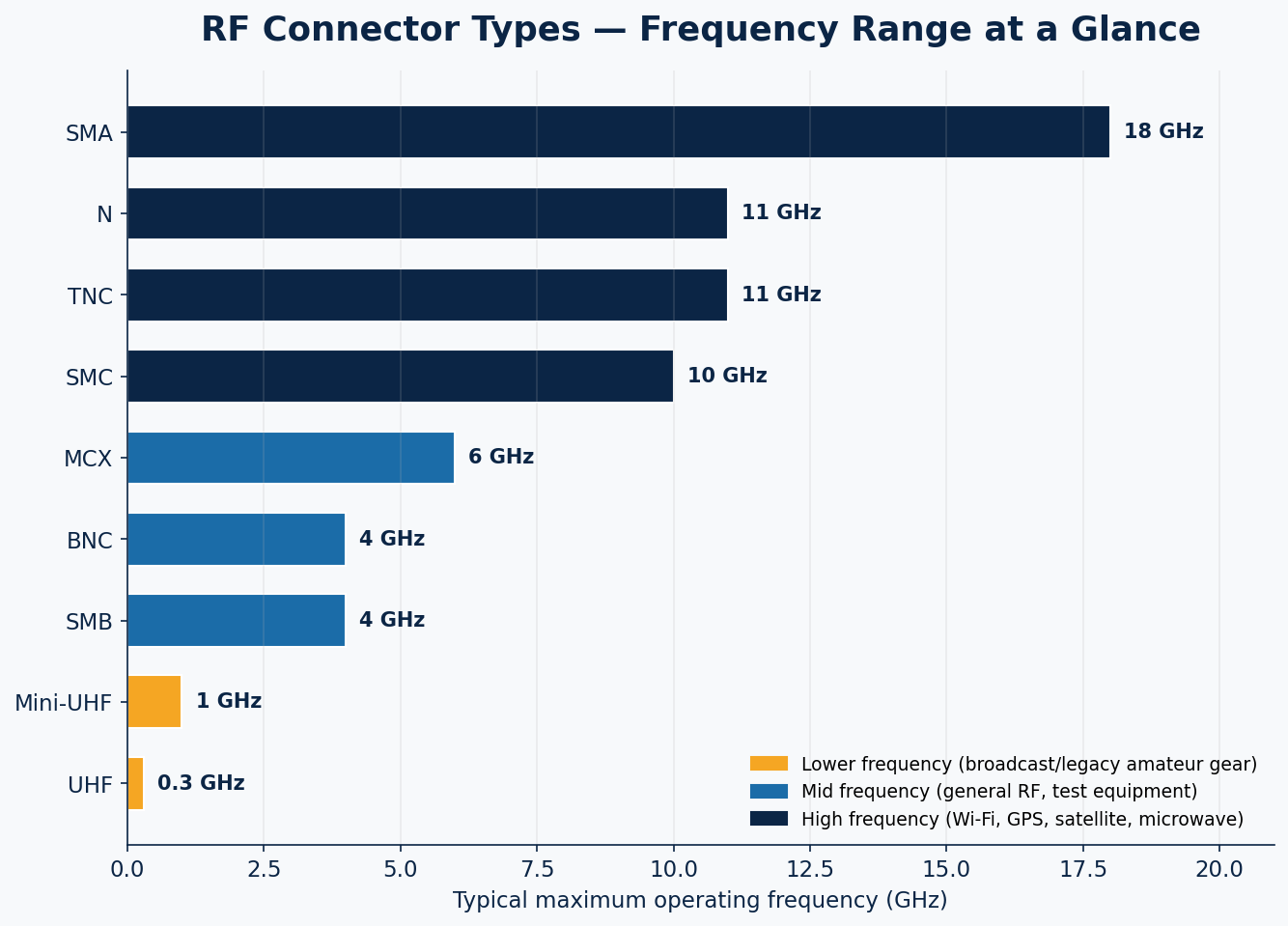
RF connectors carry high-frequency signals between cables, antennas, radios, and test equipment, and picking the right one matters — each type is built for a specific frequency range, power level, size, and application.
SMA connectors offer the best high-frequency performance of the common types, and turn up everywhere from Wi-Fi and GPS gear to satellite links and RF test equipment. Type N connectors are larger and rugged, commonly seen on base stations and outdoor antenna systems. TNC connectors use a threaded coupling for better vibration resistance, while SMC and MCX are compact options often found in embedded RF devices.
BNC connectors are the familiar bayonet-lock type seen on oscilloscopes, signal generators, and video gear — quick to connect and disconnect. SMB is a smaller snap-on connector used in compact wireless modules. Mini-UHF and UHF connectors are the ones most amateur radio operators will recognise — still very common on older and current amateur equipment alike.
As frequency goes up, connector design matters more: impedance control, signal loss, and shielding all become more critical at higher frequencies. Knowing the strengths of each connector type helps when choosing feedline, adapters, and equipment for a station — a genuinely practical thing to understand for anyone building or maintaining an antenna system.
Share This Story, Choose Your Platform!
LISTEN NOW

CAPTIVATING READS

Our blog is packed with articles and stories based around lifestyle, business, design and wellbeing. Subscribe now to get all of our updated directly to your inbox every week.